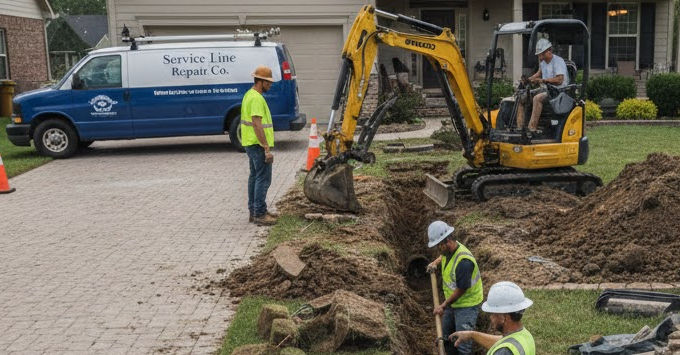
When you think about home maintenance, you probably picture leaky faucets, roof repairs, or maybe a furnace tune-up. But there is a massive network of infrastructure buried right beneath your lawn that most homeowners completely forget—until it breaks.
Service Line Coverage is an increasingly popular endorsement (an optional add-on in most cases) to a standard homeowners insurance policy. Here is everything you need to know about why it exists and whether you actually need it.
What is Service Line Coverage?
Most standard homeowners policies (HO-3 or HO-5) cover the structure of your home and your personal belongings. However, they typically exclude the underground utility lines running from the street to your house.
If a pipe bursts under your driveway, you are often responsible for the excavation and repair costs. Service Line Coverage bridges this gap, providing financial protection for the repair or replacement of these lines.
What Lines Are Covered?
While specific definitions vary by insurer, this endorsement generally covers:
- Water piping (main supply lines).
- Sewer and waste disposal pipes.
- Electrical power lines (underground).
- Natural gas lines.
- Communication lines (Internet, cable, telephone).
Common Causes of Damage
Why do these lines fail? It’s rarely a “sudden” accident. Coverage usually applies to:
- Tree Root Intrusion: Roots seeking moisture can puncture or crush clay and plastic pipes.
- Wear and Tear: Older homes may have pipes made of “Orangeburg” or cast iron that naturally corrode over decades.
- Environmental Stress: Ground freeze/thaw cycles or soil shifting can cause lines to snap or sag.
- Weight of Vehicles: Driving heavy equipment over a shallow line can cause a collapse.
Why Not Just Rely on the Utility Company?
A common misconception is that the city or utility company owns the lines all the way to the house. In reality, the “Line of Demarcation” usually sits at the property boundary or the utility meter.
Is It Worth the Cost?
A service line claim is rarely “cheap.” Because these lines are buried, the bulk of the cost often comes from excavation (digging up your yard) and remediation (replacing the driveway or landscaping afterward). A single sewer line collapse can easily cost between $3,000 and $10,000.
In contrast, adding this endorsement to your policy typically costs between $20 and $60 per year.
Pro Tip: Check your deductible. Service Line endorsements often have a specific, lower deductible (like $500) that is separate from your main dwelling deductible.
The Bottom Line
If you own an older home with original clay pipes or have large trees near your utility runs, Service Line Coverage is one of the most cost-effective ways to prevent a massive, unexpected repair bill.